probably the best developer platform*
Drop a lightweight agent into your clusters and see every workload across all of them: owners, exposed services, RBAC risk, Helm and GitOps status. The catalog, search and docs come built in.
*probably. Self-hosted, Kubernetes-native and Backstage-compatible:
your catalog-info.yaml files just work.
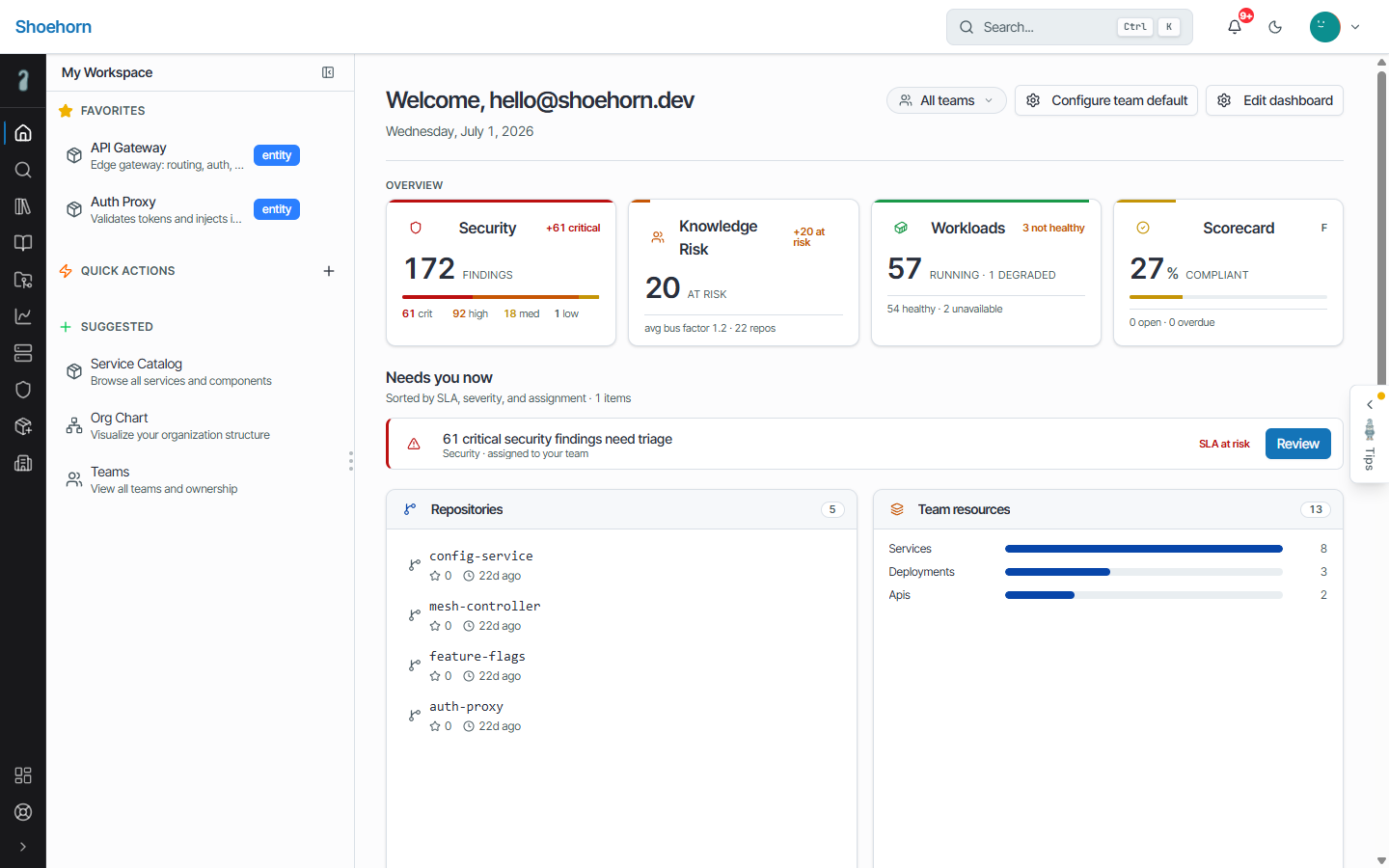
fig.1 — your whole platform at a glance, discovered automatically
Connect. Map. Ask.
Three moves. Shoehorn does the wiring in between.
01Connect
About 15 minutes of setup, once.
02Map
Shoehorn crawls your repos and clusters, then builds the ownership and dependency graph.
137 dependencies across 42 services, none hand-written.
03Ask
owned by Team Orion · 3 services depend on it
Found in 184 ms across 42 services.
Your cluster talks out.
Nothing reaches in.
Drop a lightweight agent into your cluster. It watches your workloads and pushes what's running up to Shoehorn over a single outbound connection.
- ✓No inbound access. No open ports, no firewall holes, no VPN into your cluster.
- ✓Real-time. Deploy something and it shows up in the catalog within seconds.
- ✓GitOps-aware. Understands ArgoCD and FluxCD sync status out of the box.
fig.2 — one outbound tls connection carrying workloads, gitops and helm state; inbound is structurally impossible
Everything ships together
Catalog, search, docs, governance and operations: one service in your stack. No plugins to maintain.
A catalog that builds itself
Every service, who owns it, what it depends on, where the docs live, all discovered from your repos and clusters. Nobody has to hand-write a single YAML file.
payments-api
Team Orion · Go
checkout-web
Team Vega · Svelte
notifications
Team Lyra · Python
"what breaks if i change payments-api?"
fig.3 — three direct dependents, plus refunds through billing
See the blast radius before you ship
Trace dependencies one to five levels deep. Know exactly what calls the endpoint you're about to deprecate, before the incident instead of during it.
Search that actually finds it
Typo-tolerant search across services, docs and APIs. Stop asking in Slack who owns the thing that's on fire.
auth-service
Team Phoenix · 99.98% uptime
Authentication guide
docs · updated 3d ago
12 results · 184ms
Plug your AI assistant
into your platform
Shoehorn ships an MCP server that sits in front of every cluster you've connected. Point Claude, Cursor or Copilot at it and they answer from your real catalog: what's degraded in production, who owns it, what depends on it, where the runbook is.
- ✓One server, every cluster. Nothing to wire up per cluster. The catalog already merged them.
- ✓Your permissions carry over. The same Cerbos policies as the web UI. What you can't see, your assistant can't either.
- ✓Sign in with your company login. Your IDE authenticates through the identity provider you already run. No token pasted into a config file.
- ✓Read-only. Assistants read. Writes go through the CLI, Terraform or the REST API.
prod-eu-1 and prod-us-2.payments-api: 12 restarts, liveness probe timing out.
2 of the 3 have no network policy.
Why Shoehorn?
It runs as part of your stack. No portal team needed just to keep it alive.
| Other portals | Shoehorn |
|---|---|
| Days of setup before anything's useful | Connect your GitHub org. Drop an agent into your cluster. 15 minutes. |
| Maintenance becomes an ongoing side job | Just another service in your stack |
| Common needs still require extra assembly | Catalog, search, docs, security and Kubernetes operations ship together |
| Adoption depends on how much rework's required | Backstage-compatible. Your YAML just works. |
Build with Shoehorn
Terraform, CLI, REST or MCP. Every action is an API. Same data underneath.
Free while we're in beta
Self-hosted, per cluster, never per seat. Unlimited entities, users and sources.
Free
[beta]Self-host on your own infrastructure. Pay nothing while we're in beta.
During beta, Free unlocks everything
Up to 3 Kubernetes clusters and every feature. Your feedback shapes 1.0.
- ✓Unlimited nodes, entities and users
- ✓Every feature included
- ✓Backstage-compatible: your YAML just works
- ✓A direct line to the team